

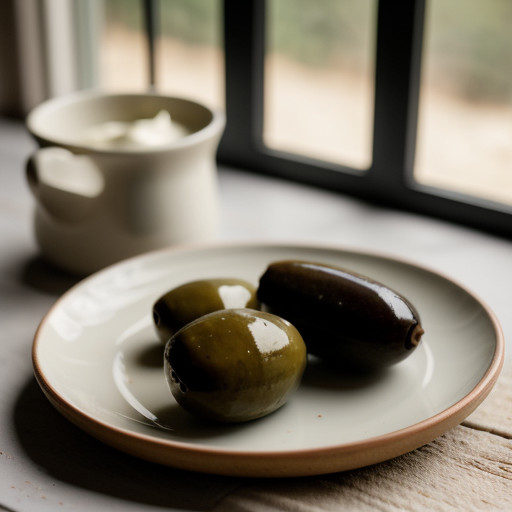
Two Methods To Cure Olives
Description
Curing fresh olives is a rewarding process that transforms their natural bitterness into a complex, savory flavor profile. This recipe outlines the classic brine method, where olives are submerged in salt water to draw out bitterness and preserve them. The process requires patience, as the olives need several weeks to months to develop their full character. Perfect for preserving a homegrown harvest or high-quality fresh olives, this method results in firm, flavorful olives ideal for appetizers, antipasto platters, or Mediterranean-inspired cooking. The resulting brine can be reused, and the olives store beautifully for over a year, making this an excellent project for any home cook looking to master preservation techniques.Ingredients
Directions
-
Prepare clean glass jars large enough to hold your fresh olives.
-
Place the fresh olives into the jars.
-
Insert a small, sealed food-storage bag filled with 1/4 cup water into each jar to keep olives immersed in brine.
-
Cover the olives with a brine mixture of 3/4 cup uniodized or pickling salt dissolved in a gallon of water.
-
Screw on the lid loosely and refrigerate.
-
After one week, drain the current brine and replace it with a fresh mixture of 1 2/3 cups salt per gallon of water.
-
After 15 days, drain and replace the brine again with a fresh mixture of 1 2/3 cups salt per gallon of water.
-
Continue to replace the brine at 1-month intervals for an additional two to three months.
-
Taste test after two months; if you prefer fairly bitter olives, you can begin eating them now.
-
For less salty olives, soak the cured olives in fresh water for three days before serving.
-
Store any uneaten desalted olives in the refrigerator in a solution of one part red or white wine vinegar to two parts water.
-
Float a layer of olive oil on top of the vinegar solution to preserve the olives.
Nutrition Facts
Servings 1
- Amount Per Serving
- Calories 93.8kcal
- % Daily Value *
- Total Fat 4.7g8%
- Saturated Fat 2.8g14%
- Cholesterol 0.9mg1%
- Sodium 5.6mg1%
- Total Carbohydrate 11.6g4%
- Dietary Fiber 0.6g3%
- Sugars 10.3g
- Protein 1.1g3%
* Percent Daily Values are based on a 2,000 calorie diet. Your daily value may be higher or lower depending on your calorie needs.
Note
If you keep the olives airtight in brine, you can store them for at least one year.
Use the cured olives for cooking or season them with herbs and spices for appetizers.
Ensure all jars and utensils are thoroughly cleaned before starting to prevent mold growth.
The curing time can vary depending on the size and variety of olives.
olives, curing, brine, preservation, pickling, fermentation, homemade, mediterranean, appetizer, antipasto, preserves, vegan, salt, water, storage, fresh olives, recipe, traditional, pantry, basics
