

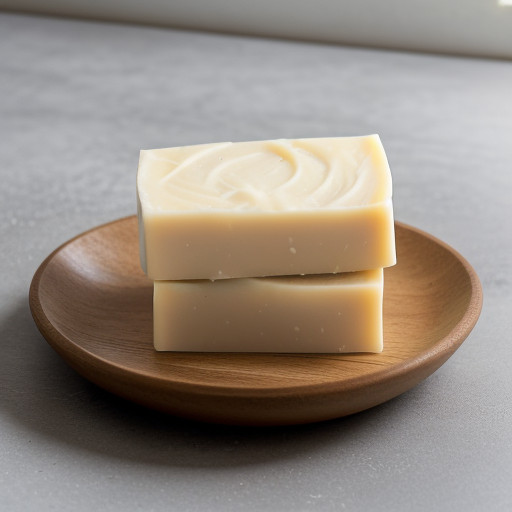
Vegetable-Oil Soap
Description
This classic cold-process soap recipe creates a gentle, moisturizing bar perfect for everyday use. By combining the cleansing power of coconut oil with the conditioning properties of olive oil and vegetable shortening, this formula produces a hard, long-lasting bar with a creamy lather. It is an excellent project for beginners learning soap making, offering a reliable base that can be easily customized with essential oils or colorants later. The process requires careful attention to safety and temperature control to ensure a successful trace and proper curing. Ideal for personal use or as a thoughtful, handmade gift.Ingredients
Directions
-
Wear rubber gloves, goggles, and a face shield. Ensure you have white vinegar nearby as a safety precaution.
-
Place the cold water in the 2-quart lye-proof cooking pot.
-
Very slowly add the lye crystals to the water, stirring constantly until completely dissolved.
-
Allow the lye solution to cool until it reaches 95 to 98 degrees F.
-
Meanwhile, melt the vegetable shortening, olive oil, and coconut oil in the 8-quart lye-proof pot.
-
Heat the oils until they reach a temperature of 95 to 98 degrees F.
-
Once both the lye solution and the oils are within the 95 to 98 degree F range, slowly pour the lye solution into the oils.
-
Stir constantly until the mixture is well combined.
-
Gently beat the mixture with an eggbeater until it reaches the consistency of thick honey (trace).
-
Pour the soap batter into lined molds, avoiding splashing.
-
Cover the molds with a blanket and let them sit undisturbed for 24 hours.
-
After 24 hours, turn the soap out of the molds and cut into bars if necessary.
-
Place the bars in a dry, airy location to cure for at least two weeks before use.
Nutrition Facts
Servings 5
- Amount Per Serving
- Calories 17813.0kcal
- % Daily Value *
- Total Fat 2025.0g3116%
- Saturated Fat 690.5g3453%
- Cholesterol 0.0mg0%
- Sodium 0.0mg0%
- Total Carbohydrate 0.0g0%
- Dietary Fiber 0.0g0%
- Sugars 0.0g
- Protein 0.0g0%
* Percent Daily Values are based on a 2,000 calorie diet. Your daily value may be higher or lower depending on your calorie needs.
Note
SAFETY: Lye (sodium hydroxide) is caustic and can cause severe chemical burns. Always wear protective gear. If lye contacts skin, rinse immediately with large amounts of water. Use vinegar to neutralize spills on surfaces.
INGREDIENTS: Buy pure lye crystals or flakes, not liquid drain cleaners. Coconut oil can be found in health food stores.
CURING: A fine white powder (sodium carbonate or "lye ash") may appear on the surface after a few days. This is normal and can be washed off before use; it can cause dry skin if left on.
STORAGE: Keep soap away from children and pets during the curing process.
soap-making, cold-process, homemade-soap, olive-oil, coconut-oil, lye, sodium-hydroxide, diy, handmade, moisturizing, bar-soap, craft, vegan-soap, curing, trace
