

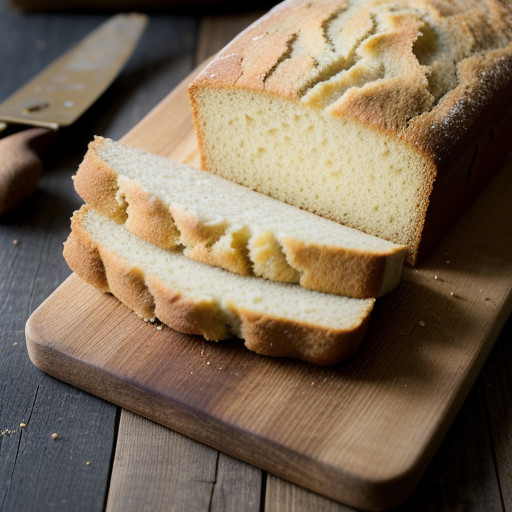
White Bread (Sponge Method)
Description
This classic white bread recipe uses a traditional sponge method, where a portion of the flour and yeast is allowed to ferment before the final dough is mixed. This technique develops a deeper, more complex flavor and a tender, airy crumb that store-bought loaves simply cannot match. The dough is enriched with milk and shortening, resulting in a soft, slightly sweet loaf that stays fresh for days. It is perfect for sandwiches, toast, or simply served warm with butter.Directions
-
Make the sponge: In a large bowl, combine the warm water and 2 tablespoons of sugar.
-
Sprinkle or crumble in the yeast and stir until completely dissolved.
-
Add 2 cups of sifted enriched flour and beat until the mixture is smooth.
-
Cover the bowl and let the sponge rise in a warm, draft-free place until light and spongy, about 1 hour.
-
Prepare the milk mixture: Scald the milk in a saucepan.
-
Stir in the remaining 2 tablespoons of sugar, salt, and shortening until dissolved.
-
Cool the milk mixture to lukewarm (approximately 110°F/43°C).
-
Stir the risen sponge down to deflate it.
-
Stir the lukewarm milk mixture into the sponge.
-
Stir in 5 cups of sifted enriched flour until a stiff dough forms.
-
Turn the dough out onto a lightly floured surface.
-
Knead the dough until it is smooth and elastic, about 10-12 minutes.
-
Place the dough in a greased bowl and brush the top with shortening.
-
Cover and let rise in a warm, draft-free place until doubled in bulk, about 45 minutes.
-
Punch down the dough and turn it out onto a lightly floured board.
-
Divide the dough in half and let it rest for 15 to 20 minutes.
-
Shape the dough into loaves.
-
Place the loaves in greased 9x5x3-inch bread pans.
-
Cover and let rise in a warm, draft-free place until the center is slightly higher than the edge of the pan, about 1 hour.
-
Bake in a preheated 400°F (200°C) oven for about 50 minutes, or until golden brown and hollow-sounding when tapped.
Nutrition Facts
Servings 2 cups
- Amount Per Serving
- Calories 100kcal
- % Daily Value *
- Total Fat 0.5g1%
- Saturated Fat 0.1g1%
- Sodium 100mg5%
- Total Carbohydrate 20g7%
- Dietary Fiber 0.5g2%
- Sugars 1g
- Protein 3g6%
* Percent Daily Values are based on a 2,000 calorie diet. Your daily value may be higher or lower depending on your calorie needs.
