

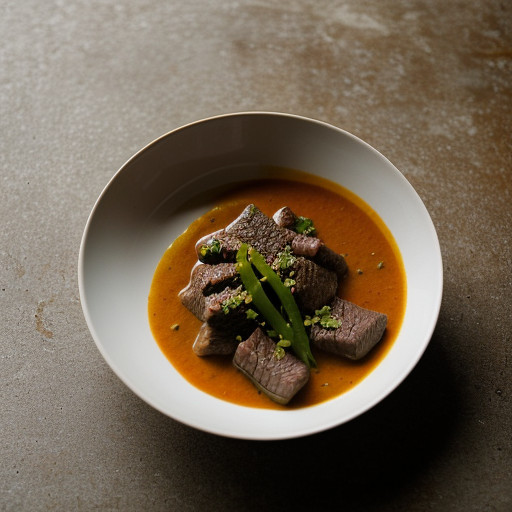
Zilzil Alecha (Beef in Green Pepper Sauce)
Description
Zilzil Alecha is a classic Ethiopian dish that highlights the fresh, pungent heat of green peppers and serranos. This recipe features boneless sirloin sliced into thin strips, seared in niter kebbeh (spiced butter) or regular butter for a rich, savory base. The meat is then simmered in a vibrant, smooth puree made from green bell peppers, chiles, garlic, ginger, and warm spices like turmeric and cardamom. The result is a dish with a beautiful emerald hue and a complex flavor profile that is both spicy and aromatic, traditionally served with injera.Directions
-
Chop 2 of the green bell peppers into coarse chunks.
-
Place the chopped bell peppers, serrano chiles, minced garlic, chopped ginger, turmeric, cardamom, salt, white pepper, and wine into a blender.
-
Blend the mixture until it forms a smooth puree. Set aside.
-
Cut the remaining green bell pepper into strips measuring 2 inches long by 1/2 inch wide. Set aside.
-
Trim excess fat from the sirloin and slice it into 1/2-inch thick slices.
-
Cut the slices into strips measuring 2 inches long by 1/4 inch wide.
-
Heat 1/2 cup of butter or niter kebbeh in a heavy 10- to 12-inch skillet over medium-high heat until hot enough that a drop of water dances.
-
Brown the beef strips in batches, turning often, until evenly browned but not burnt. Transfer browned meat to a plate.
-
Once all meat is browned, pour the remaining fat from the skillet into a measuring cup.
-
Add enough additional butter or niter kebbeh to the cup to measure 1/2 cup. Set this fat aside.
-
Wash and dry the skillet thoroughly.
-
Return the skillet to low heat and add the finely chopped onions.
-
Cook the onions, stirring continuously to prevent burning, until soft and dry, about 5 minutes.
-
Pour the reserved 1/2 cup of butter/niter kebbeh into the skillet with the onions.
-
When the fat begins to sputter, add the green pepper strips.
-
Cook for 2 to 3 minutes, stirring continuously, until the pepper strips are softened.
-
Pour the pureed green pepper mixture into the skillet.
-
Stir and heat the sauce until it reaches a boil.
-
Add the beef strips and any accumulated juices from the plate to the skillet.
-
Stir to coat the meat evenly with the sauce.
-
Reduce heat, partially cover the skillet, and simmer until the beef is cooked to your desired tenderness.
Nutrition Facts
Servings 4 servings
- Amount Per Serving
- Calories 450kcal
- % Daily Value *
- Total Fat 25g39%
- Saturated Fat 12g60%
- Cholesterol 95mg32%
- Sodium 450mg19%
- Total Carbohydrate 12g4%
- Dietary Fiber 3g12%
- Sugars 4g
- Protein 45g90%
* Percent Daily Values are based on a 2,000 calorie diet. Your daily value may be higher or lower depending on your calorie needs.
ethiopian, beef, green pepper, sauce, alecha, zilzil, niter kebbeh, spicy, stew, african, dinner, ginger, garlic, turmeric, cardamom, serrano, chili, injera
