

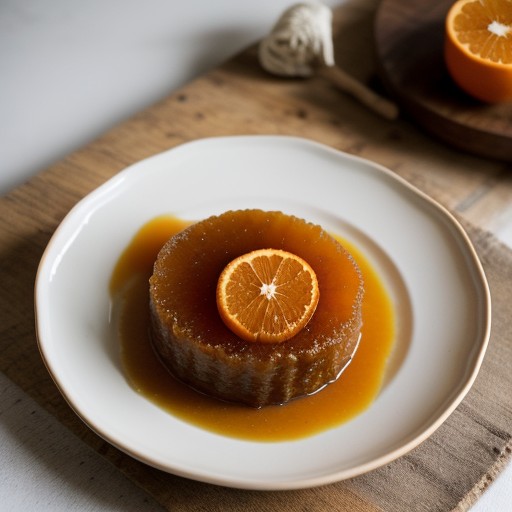
Jim’S Orange Marmalade
Description
This traditional Seville orange marmalade captures the essence of winter citrus with a perfect balance of bright acidity and deep sweetness. Using whole Seville oranges and a fresh lemon, this recipe extracts maximum flavor from the zest, pulp, and pith. The long simmering process softens the bitter peel while developing a rich, complex body. The result is a glossy, firm-set preserve with delicate strands of orange rind suspended in a golden gel. Ideal for spreading on warm toast, scones, or cheese boards, this artisanal condiment brings a sophisticated, home-made quality to your breakfast table. Its robust flavor profile makes it a versatile addition to both sweet and savory dishes.Ingredients
Directions
-
Wash the Seville oranges and lemon thoroughly.
-
Place oranges and lemon in a large pot and cover with 6 cups of water.
-
Cover and bring to a simmer, then reduce heat to low.
-
Simmer gently for 2 hours until the fruit is very tender, ensuring it does not boil vigorously.
-
Turn off the heat and remove the fruit from the pot, letting it cool for 5 minutes.
-
Cut the fruit in half and scoop the pulp, seeds, and pith into a bowl; set the empty skins aside.
-
Place the pulp mixture in a sieve lined with damp cheesecloth over a bowl.
-
Gather the ends of the cheesecloth and squeeze out all remaining juice and pulp.
-
Measure the liquid; if less than 6 cups, add water to make up the difference.
-
Remove any remaining white pith from the reserved orange skins.
-
Cut the orange skins into fine strips and add them to the strained liquid.
-
Add the sugar to the pan with the liquid and skins.
-
Place over low heat and stir until the sugar is completely dissolved.
-
Bring the mixture to a rolling boil.
-
Boil hard, stirring occasionally to prevent scorching, for 60 to 90 minutes until the jelling point is reached.
-
Test for jelling point by dropping a small amount of hot marmalade onto a chilled saucer.
-
If the surface wrinkles when pushed with a finger, it is ready; if not, continue boiling and test every 5 minutes.
-
Remove the pan from the heat and stir for 5 minutes, skimming off any foam that rises to the surface.
-
Ladle the hot marmalade into sterilized jars, leaving 1/2 inch headspace.
-
Seal the jars immediately according to your preferred canning method.
Nutrition Facts
Servings 6
- Amount Per Serving
- Calories 1852.4kcal
- % Daily Value *
- Total Fat 0.3g1%
- Saturated Fat 0.0g0%
- Cholesterol 0.0mg0%
- Sodium 4.8mg1%
- Total Carbohydrate 478.5g160%
- Dietary Fiber 5.9g24%
- Sugars 470.8g
- Protein 2.2g5%
* Percent Daily Values are based on a 2,000 calorie diet. Your daily value may be higher or lower depending on your calorie needs.
Note
Prepare for the jelling test by placing 4 small saucers in the freezer at the beginning of the process so they are cold when needed.
Ensure jars are properly sterilized before filling to ensure safe storage and longevity of the marmalade.
The cooking time may vary depending on the natural pectin content of the fruit and the desired thickness of the final product.
Seville oranges are best used because of their high pectin and acid content, which helps the marmalade set properly and provides the characteristic bitter flavor.
Store sealed jars in a cool, dark place. Once opened, refrigerate and consume within a few weeks.
