

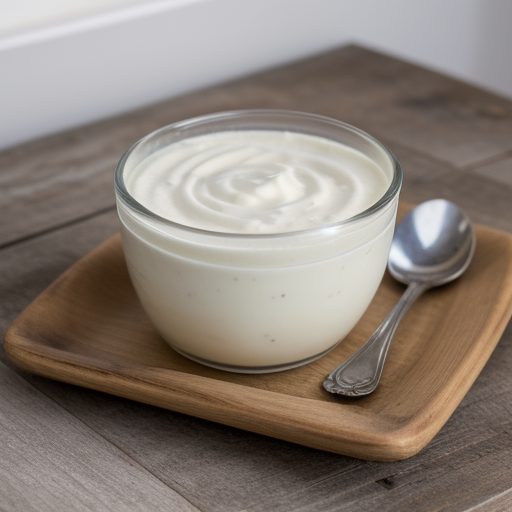
Homemade Yogurt
Description
This homemade yogurt recipe transforms simple milk and a small amount of store-bought plain yogurt into a creamy, tangy, and nutritious staple. By carefully heating the milk to kill unwanted bacteria and then cooling it to the perfect incubation temperature, you create an ideal environment for the live cultures to thrive. The result is a thick, rich yogurt with a clean, fresh flavor that far surpasses many commercial brands. It is a versatile ingredient perfect for breakfast bowls, smoothies, or as a base for sauces and dips. Making yogurt at home is surprisingly easy, requiring minimal active time and just a warm place for it to set. Enjoy the satisfaction of crafting a wholesome, preservative-free dairy product that keeps well in the refrigerator for several days.Ingredients
Directions
-
Sterilize all equipment, including jars and utensils, by boiling them in water or running them through a hot dishwasher cycle.
-
Pour the milk into a large saucepan and heat over medium heat, stirring occasionally to prevent scorching, until it reaches a full boil.
-
Remove the milk from heat and allow it to cool until it reaches 110 degrees F (43 degrees C), using a candy thermometer to check the temperature.
-
In a small bowl, whisk together the commercial plain yogurt and 1/4 cup of the warm milk until smooth and fully incorporated.
-
Pour this yogurt mixture back into the large saucepan of warm milk and whisk gently to distribute the culture evenly.
-
Pour the milk mixture into a pre-warmed thermos or insulated container, seal tightly, and place in a warm spot for 7 to 8 hours.
-
After incubation, turn the yogurt out into a bowl set over a larger bowl of ice water to cool it down quickly while stirring gently.
-
Cover the yogurt and refrigerate for at least 4 hours, or until it has thickened to your desired consistency.
Nutrition Facts
Servings 1
- Amount Per Serving
- Calories 110.0kcal
- % Daily Value *
- Total Fat 2.9g5%
- Saturated Fat 2.0g10%
- Cholesterol 6.4mg3%
- Sodium 102.5mg5%
- Total Carbohydrate 12.7g5%
- Dietary Fiber 0.0g0%
- Sugars 12.7g
- Protein 8.7g18%
* Percent Daily Values are based on a 2,000 calorie diet. Your daily value may be higher or lower depending on your calorie needs.
Note
For a thicker yogurt, you can add powdered milk to the liquid milk before heating, or strain the finished yogurt through cheesecloth to remove whey.
Ensure your yogurt starter contains live active cultures and has not been pasteurized after fermentation, or it will not culture the milk.
Store homemade yogurt in an airtight container in the refrigerator. It will keep for 4 to 5 days.
You can sweeten the yogurt with honey, sugar, or vanilla extract, and serve with fresh berries like raspberries if desired.
If you do not have a thermos, you can wrap the jar of yogurt in towels and place it in an oven with the light on, or use a yogurt maker.
