

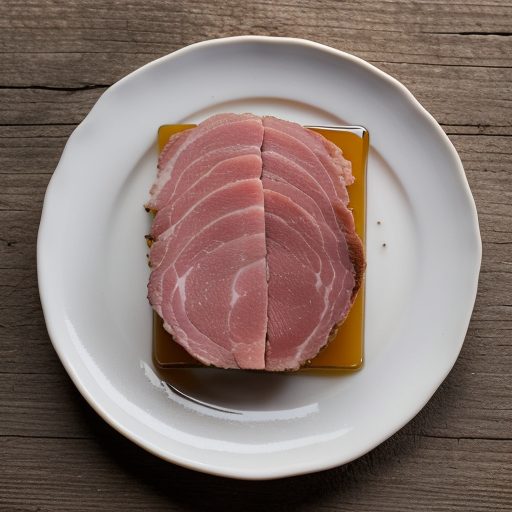
Honey Cure For Ham
Description
This traditional dry cure transforms a raw ham into a tender, flavorful delicacy through a slow process of salt, saltpeter, and sweet honey. The combination draws out moisture while infusing the meat with a subtle sweetness and savory depth characteristic of classic British preservation methods. The result is a firm, textured ham with rich, complex flavors that develop over weeks. This method is ideal for holiday preparations or creating a specialty charcuterie board centerpiece. While it requires patience and careful attention to the curing schedule, the reward is a homemade product that surpasses store-bought alternatives in taste and quality.Ingredients
Directions
-
Mix the rough salt, saltpeter, and pepper together in a bowl to create the curing rub.
-
Rub the ham all over with the salt mixture, ensuring even coverage on all surfaces.
-
Place the ham in a large, non-reactive salting pan or container.
-
Turn the ham and rub it well with the remaining mixture every day for 4 days.
-
After 4 days, pour the honey over the ham and rub it thoroughly into the meat.
-
Rub the ham with the pickle mixture twice a week for one month.
-
Hang the cured ham up to dry for the final maturation stage.
Nutrition Facts
Servings 1
- Amount Per Serving
- Calories 36.2kcal
- % Daily Value *
- Total Fat 0.9g2%
- Saturated Fat 0.3g2%
- Cholesterol 12.0mg4%
- Sodium 491726.5mg20489%
- Total Carbohydrate 0.3g1%
- Dietary Fiber 0.0g0%
- Sugars 0.3g
- Protein 6.2g13%
* Percent Daily Values are based on a 2,000 calorie diet. Your daily value may be higher or lower depending on your calorie needs.
Note
Ensure you use food-grade saltpeter (sodium nitrite) specifically intended for curing meats. Do not substitute with industrial salt.
The total curing time is approximately one month plus the drying period. Maintain a cool, well-ventilated area for curing to prevent spoilage.
Use a non-corrosive container such as glass, ceramic, or food-grade plastic for the salting pan.
Adjust the amount of salt based on the size of the ham; generally, use 1% of the meat's weight in salt.
dry cure, ham, honey, saltpeter, pork, preservation, charcuterie, traditional, british, homemade, cured meat, salting, pickling, protein
