

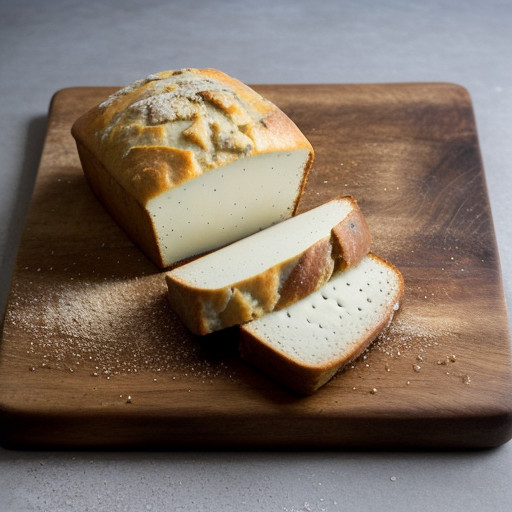
James Beard’s Cheese Bread
Description
This classic James Beard cheese bread is a comforting, savory treat perfect for pairing with soups, salads, or as a standalone snack. The dough is enriched with butter and a hint of Tabasco for depth, while a generous blend of Parmesan and Gruyère provides a sharp, nutty flavor profile. The result is a tender, elastic loaf with a beautifully golden crust. Ideal for casual gatherings, dinner parties, or simply enjoying warm from the oven with a pat of butter.Ingredients
Directions
-
Dissolve the yeast and sugar in 1/4 cup of the warm water; let stand until foamy, about 5-10 minutes.
-
In a large bowl, mix 5 cups of flour and the salt.
-
Make a well in the center of the flour mixture.
-
Add the remaining 1 1/2 cups warm water, softened butter, Tabasco, and the yeast mixture to the well.
-
Stir with a wooden spoon or spatula until the dough comes together and is well amalgamated.
-
Turn the dough out onto a heavily floured board (use about 1/2 cup flour).
-
Knead the dough for 10 to 12 minutes, adding more flour if necessary, until it is smooth, elastic, and satiny.
-
Place the dough in a buttered or oiled bowl and turn to coat all sides.
-
Cover with a towel and let rise in a warm, draft-free spot until doubled in bulk, about 1.5 to 2 hours.
-
Punch down the dough and turn it out onto a lightly floured board.
-
Knead in the grated Gruyère (or Emmentaler) and Parmesan cheese until thoroughly blended.
-
Cut the dough in half and let each piece rest for 10 minutes.
-
Roll out each half into an 11 x 6-inch rectangle and let rest for 2-3 minutes.
-
Roll each rectangle up tightly, pinching the edges and tucking in the ends to form a loaf about 4.5 x 7.5 inches.
-
Place the loaves in two well-buttered baking tins.
-
Cover and let rise in a warm spot until the dough reaches the top of the tins or doubles in size.
-
Bake on the center rack of a preheated 375°F (191°C) oven for approximately 30 minutes.
-
Check for doneness by tapping the bottom; the loaf should sound hollow.
-
Remove from tins and bake directly on the oven rack for a few minutes to firm the crust.
-
Cool the bread on wire racks before slicing.
Nutrition Facts
Servings 4 cups
- Amount Per Serving
- Calories 110kcal
- % Daily Value *
- Total Fat 2.5g4%
- Saturated Fat 1.5g8%
- Cholesterol 7mg3%
- Sodium 230mg10%
- Total Carbohydrate 18g6%
- Dietary Fiber 0.5g2%
- Sugars 0.5g
- Protein 3g6%
* Percent Daily Values are based on a 2,000 calorie diet. Your daily value may be higher or lower depending on your calorie needs.
