

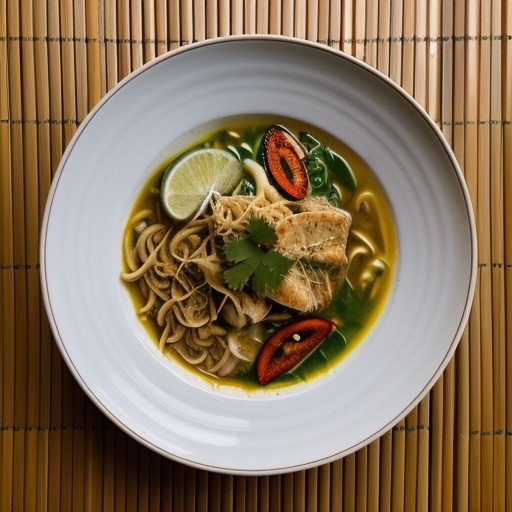
Laksa
Description
This comforting Laksa features a rich, aromatic broth built from galangal, lemongrass, and kaffir lime leaves, creating a complex flavor profile that is both spicy and fragrant. Whole fish is gently poached in the simmering liquid, infusing the soup with delicate savory notes while keeping the flesh tender and flaky. Rice vermicelli adds a soft, slurpable texture that absorbs the delicious coconut-infused broth. Fresh herbs like basil and mint provide a bright, fresh contrast to the heat of the chilies. It is a deeply satisfying meal perfect for chilly evenings or when you crave the bold flavors of Southeast Asian cuisine. Simple to assemble yet impressive to serve, this dish brings restaurant-quality warmth to your home table.Ingredients
Directions
-
Rinse the rice vermicelli under warm water to separate strands, then soak in warm water until softened but still firm, about 10 minutes. Drain and set aside.
-
Clean the whole fish thoroughly, removing scales and guts if necessary. Pat dry with paper towels.
-
In a large pot or wok, combine the water, galangal powder, chopped lemongrass stems, dried kaffir lime leaves, and dried red chilies.
-
Bring the liquid to a boil over high heat, then reduce heat to medium-low and simmer for 15 minutes to allow the aromatics to infuse into the broth.
-
Add the whole fish to the simmering broth. Gently poach the fish for 15-20 minutes, depending on size, until the flesh is opaque and flakes easily with a fork.
-
Stir in the coconut cream (if using, per notes) and salt and sugar to taste. Simmer for another 5 minutes to meld flavors.
-
Divide the soaked rice vermicelli among six serving bowls.
-
Carefully ladle the hot broth and fish over the noodles in each bowl.
-
Garnish each bowl with fresh bean sprouts, halved fresh red chilies, fresh mint leaves, and fresh basil leaves.
-
Serve immediately while hot, allowing diners to adjust spice levels with additional fresh chilies if desired.
Nutrition Facts
Servings 6
- Amount Per Serving
- Calories 1870.6kcal
- % Daily Value *
- Total Fat 14.9g23%
- Saturated Fat 3.5g18%
- Cholesterol 170.2mg57%
- Sodium 200.5mg9%
- Total Carbohydrate 369.4g124%
- Dietary Fiber 13.7g55%
- Sugars 308.4g
- Protein 83.6g168%
* Percent Daily Values are based on a 2,000 calorie diet. Your daily value may be higher or lower depending on your calorie needs.
Note
The original ingredient list included coconut cream, bean sprouts, salt, and sugar in the directions text. These are essential for authentic Laksa flavor and texture. Add 3 2/3 cups coconut cream for a rich, creamy broth. Season with 2 teaspoons salt and 2 teaspoons caster sugar to balance the spice and acidity.
For the whole fish, firm white fish like snapper, sea bass, or tilapia works best. Ensure the fish is fresh and clean. If using smaller fish, adjust cooking time to prevent overcooking.
If you prefer a milder spice level, remove the seeds from the fresh red chilies before halving them. For extra heat, leave the seeds in or add more fresh chilies.
Bean sprouts add a crucial crunchy texture. Add them just before serving so they remain crisp. You can also add tofu puffs or hard-boiled eggs for extra protein.
Leftover Laksa can be stored in an airtight container in the refrigerator for up to 2 days. Reheat gently on the stove, adding a splash of water or coconut cream if the broth has thickened too much. Do not reheat the rice noodles with the broth to avoid mushiness; rehydrate fresh noodles for leftovers if possible.
