

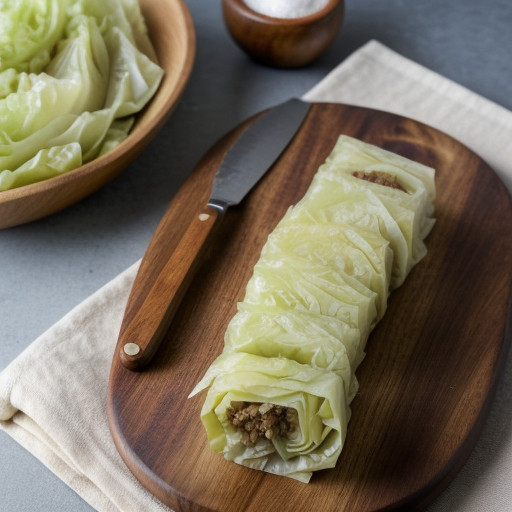
These traditional Lebanese cabbage rolls, known as Mahshi, are a comforting and hearty dish that brings the warmth of Middle Eastern home cooking to your table. The filling combines coarsely ground beef with fluffy rice, seasoned with aromatic spices like allspice and garlic for a rich, savory depth. Each roll is carefully wrapped in tender, blanched cabbage leaves and simmered slowly in a bright, acidic tomato sauce infused with lemon juice. The result is a perfect balance of textures: soft, melt-in-your-mouth cabbage leaves encasing a flavorful, meaty center. This dish is ideal for family dinners, potlucks, or as a satisfying main course that pairs beautifully with crusty bread or a fresh green salad. It’s a timeless recipe that delivers robust flavors and nostalgic comfort in every bite.
Lebanese Cabbage Rolls
Description
These traditional Lebanese cabbage rolls, known as Mahshi, are a comforting and hearty dish that brings the warmth of Middle Eastern home cooking to your table. The filling combines coarsely ground beef with fluffy rice, seasoned with aromatic spices like allspice and garlic for a rich, savory depth. Each roll is carefully wrapped in tender, blanched cabbage leaves and simmered slowly in a bright, acidic tomato sauce infused with lemon juice. The result is a perfect balance of textures: soft, melt-in-your-mouth cabbage leaves encasing a flavorful, meaty center. This dish is ideal for family dinners, potlucks, or as a satisfying main course that pairs beautifully with crusty bread or a fresh green salad. It&# 226;ÂÂs a timeless recipe that delivers robust flavors and nostalgic comfort in every bite.Ingredients
Directions
-
Wash the rice thoroughly and drain well.
-
In a large bowl, combine the drained rice, coarsely ground beef, 1 cup of canned tomatoes (or 1/2 can tomato paste), salt, pepper, 1/2 teaspoon allspice, MSG, and minced garlic. Mix until well combined to create the filling.
-
Separate the cabbage leaves from the head. Drop them individually into a large pot of salted boiling water and blanch for a few minutes until limp but not falling apart. Remove and let drain.
-
Trim the thick, heavy stem from each cabbage leaf to make rolling easier. Reserve some of the trimmed stems and place them in the bottom of a heavy saucepan.
-
Place about 1 heaping tablespoon of the meat and rice mixture onto each cabbage leaf. Roll the leaf firmly around the filling, tucking in the sides like a parcel.
-
Arrange the rolled cabbage neatly in rows in the saucepan, placing whole garlic cloves among the rolls as you layer them. Create several layers if necessary.
-
Pour the remaining 1 cup of canned tomatoes (or diluted tomato paste) over the rolls, then add enough hot water to just cover the rolls. Sprinkle with 1/2 teaspoon salt.
-
Cover the saucepan and simmer on low heat for 45 minutes to 1 hour, until the rice is cooked and the cabbage is tender.
-
During the last 15 minutes of cooking, squeeze the juice of 2 lemons over the rolls to add acidity and brightness.
-
Serve warm, spooning some of the cooking liquid over the rolls.
Nutrition Facts
Servings 1
- Amount Per Serving
- Calories 368.0kcal
- % Daily Value *
- Total Fat 17.2g27%
- Saturated Fat 6.9g35%
- Cholesterol 88.5mg30%
- Sodium 9836.8mg410%
- Total Carbohydrate 18.2g7%
- Dietary Fiber 0.9g4%
- Sugars 0.8g
- Protein 31.5g63%
* Percent Daily Values are based on a 2,000 calorie diet. Your daily value may be higher or lower depending on your calorie needs.
Note
Storage: Store leftovers in an airtight container in the refrigerator for up to 3-4 days. Reheat gently on the stovetop with a splash of water or broth to prevent drying out.
Ingredient Substitutions: You can substitute ground lamb or turkey for the beef for a different flavor profile. For a vegetarian version, omit the meat and increase the rice and add lentils or chickpeas to the filling.
Tips: If the cabbage head is very large, you may need to cook in batches or use a very large Dutch oven. Ensure the rolls are tightly packed to prevent them from unraveling during cooking. Adjust the salt in the filling carefully, as the tomatoes and cooking liquid will also contribute sodium.
Variations: Some variations include adding pine nuts, currants, or mint to the filling for added texture and flavor complexity.
