

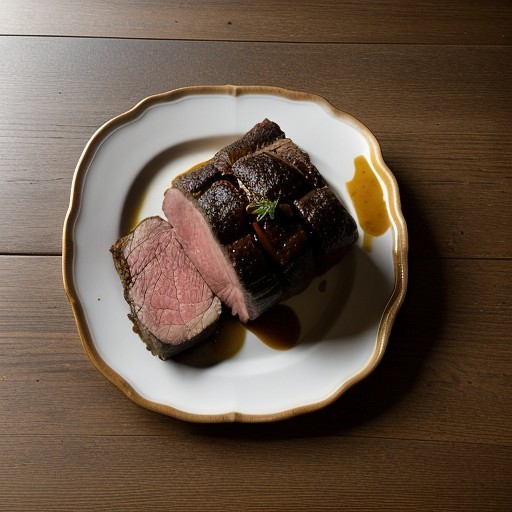
Roast Prime Rib Of Beef
Description
This classic prime rib roast is the ultimate showstopper for holiday feasts or special weekend dinners. The key to success lies in the two-stage roasting method: starting hot to sear the exterior, then lowering the heat to gently cook the interior to a perfect pink. The result is beef that is incredibly tender and juicy, with a rich, savory crust. Served with a reduced wine and beef stock sauce, it offers deep, complex flavors that pair beautifully with the natural richness of the meat. While it requires patience, the technique is straightforward, ensuring a restaurant-quality meal that will impress family and guests alike. It is a timeless dish that celebrates the quality of the ingredients.Ingredients
Directions
-
Preheat oven to 450&# 194;°F (230ðC).
-
Rub the dark soy sauce, Kitchen Bouquet, and dry mustard all over the prime rib roast.
-
Season generously with salt and pepper.
-
Pack the sliced onions on top of the roast.
-
Place the roast on a rack in a roasting pan.
-
Roast at 450ðF (232ðC) for 20 minutes to sear the exterior.
-
Reduce oven temperature to 325ðF (165ðC) and roast for 1 hour.
-
Reduce oven temperature again to 300ðF (150ðC) and roast for another 1 hour, or until the internal temperature reaches 115ðF (46ðC) for rare.
-
Remove the roast from the oven and let it rest in a warm place for 15 minutes.
-
While the meat rests, prepare the sauce: Bring beef stock and red wine to a boil in a small saucepan.
-
Simmer, uncovered, until reduced to 2 cups.
-
Add any pan drippings from the rib roast to the sauce.
-
Strain the sauce and skim off as much fat as possible.
-
Season the sauce with salt to taste.
-
Slice the beef and serve immediately with the wine sauce.
Nutrition Facts
Servings 10
- Amount Per Serving
- Calories 69.4kcal
- % Daily Value *
- Total Fat 4.0g7%
- Saturated Fat 1.5g8%
- Cholesterol 19.5mg7%
- Sodium 260.3mg11%
- Total Carbohydrate 0.8g1%
- Dietary Fiber 0.2g1%
- Sugars 0.1g
- Protein 7.1g15%
* Percent Daily Values are based on a 2,000 calorie diet. Your daily value may be higher or lower depending on your calorie needs.
Note
Use a meat thermometer to ensure accuracy. For medium-rare, aim for an internal temperature of 125ðF (52ðC) before resting.
Homemade beef stock yields a superior sauce compared to store-bought versions.
Letting the meat rest after roasting is crucial to allow the juices to redistribute, ensuring a moist result.
prime rib, beef roast, holiday dinner, christmas dinner, thanksgiving, roast beef, wine sauce, pan gravy, slow roast, meat thermometer, bone-in beef, special occasion, family dinner, beef stock, red wine reduction
