

This American main features ” and the largest are from beef, 1/2″ to 4′. think of sheep. It delivers hearty, protein-packed satisfaction. Great for weeknight dinners or when you want something satisfying for the whole family. Simple to make with ingredients you likely already have on hand, this is a recipe you will come back to again and again.
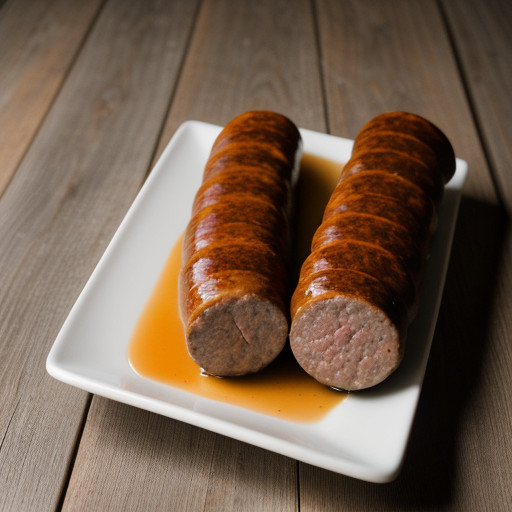
Sausage: Casing Information & Preparation
Description
This American main features " and the largest are from beef, 1/2" to 4'. think of sheep. It delivers hearty, protein-packed satisfaction. Great for weeknight dinners or when you want something satisfying for the whole family. Simple to make with ingredients you likely already have on hand, this is a recipe you will come back to again and again.Ingredients
Directions
-
casings as being the size of most hot dogs, and beef casings the size of a large salami.
-
The hog casings are the most common since many sausages are made in the two inch diameter range.
-
Their sizes range from small (1 1/2 inch), medium (2 inch), and large (2 1/2 inches).
-
all should be kept refrigerated or frozen until ready to use.
-
You should be familiar with two other types of casing; collagen and muslin.
-
Collagen casings are made of natural, pure, edible protein.
-
They generally cost a little more than intestines, are sometimes a little harder to find, but are convienent to use and usually can be substituted freely for recipes calling for natural casings.
-
Muslin casings can be purchased or homemade and are sometimes used with summer sausage and salami.
-
One needn't be a Betsy Ross to stitch up a muslin casing.
-
Just follow the instructions given in Chapter 4.
-
Muslin Casing: You will need a piece of unbleached muslin about 12" long and 8" wide.
-
Fold the muslin lengthwise and tightly stitch a seam across one of the short ends and continue along the open side.
-
Keep the stitching about an eight of an inch from the edge of the material.
-
The short side of the seam can be curved in a semi-circle to give the finished product a rounded end.
-
Turn the casing inside out so that the stitching is on the inside.
-
Set it aside until you are ready to stuff it.
-
Casing Snip off about four feet of casing.
-
(Better too much than too little because any extra can be repacked in salt and used later.) Rinse the casing under
-
cool running water to
-
remove any salt clinging to it.
-
Place it in a bowl of cool water and let it soak for about a half an hour.
-
While waiting for the casing to soak, you can begin preparing the meat.
-
After soaking, rinse the casing under cool running water.
-
Slip one end of the casing over the faucet nozzle.
-
Hold the casing firmly on the nozzle, and turn the cold water on, gently at first, and then more forcefully.
-
This procedure will flush out any salt in the casing and pinpoint any breaks.
-
Should you find a break, simply snip out a small section of the casing.
-
Place the casig in a bowl of water and add a splash of white vinegar.
-
A tablespoon of vinegar per cup of water is sufficient.
-
The vinegar softens the casing a bit more and makes it more transparent, which in turn makes your sausage more pleasing to the eye.
-
Leave the casing in the water/vinegar solution until you are ready to use it.
-
Rinse it well and drain before stuffing.
Nutrition Facts
Servings 1
- Amount Per Serving
- Calories 62.5kcal
- % Daily Value *
- Total Fat 3.8g6%
- Saturated Fat 1.5g8%
- Cholesterol 19.5mg7%
- Sodium 18.0mg1%
- Total Carbohydrate 0.0g0%
- Dietary Fiber 0.0g0%
- Sugars 0.0g
- Protein 6.5g13%
* Percent Daily Values are based on a 2,000 calorie diet. Your daily value may be higher or lower depending on your calorie needs.
american, amp, are, beef, casing, information, largest, main, preparation, sausage, sheep, stuffing, think, title
