

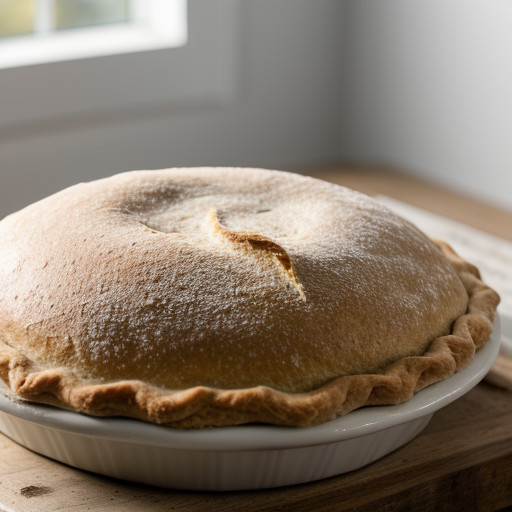
Sourdough Starter
Description
Creating a sourdough starter is the first essential step in baking true artisan bread. This simple mixture of flour and water, naturally fermented over several days, develops a complex network of wild yeasts and bacteria. The result is a living culture that leavens dough and imparts a distinctive tangy flavor and chewy texture. While it requires patience, the process is straightforward and rewarding. Once established, this starter can be maintained indefinitely, becoming a cherished kitchen heirloom. Use it to bake crusty loaves, fluffy pancakes, or crisp crepes. This recipe provides the initial foundation; keep your starter fed and happy for years of delicious baking. It is naturally vegan and gluten-free if using GF flour.Ingredients
Directions
-
In a clean glass or plastic container, combine 1 cup of bread flour and 1 cup of lukewarm water.
-
Stir thoroughly with a spoon or whisk until no dry flour remains and the mixture is smooth.
-
Cover the container loosely with a lid or cheesecloth secured with a rubber band to allow gas to escape.
-
Place the container in a warm, draft-free spot at room temperature (ideally 70-75&# 194;°F or 21-24ðC).
-
Let the mixture sit undisturbed for 12 hours.
-
After 12 hours, discard half of the mixture from the container.
-
Add 1/2 cup of bread flour and 1/2 cup of lukewarm water to the remaining starter.
-
Stir well to combine, cover loosely, and return to the warm spot.
-
Repeat the feeding process (discard half, add 1/2 cup flour and 1/2 cup water) every 12 hours for the next 2 to 3 days.
-
Look for signs of activity: bubbles forming, a sour smell, and the starter doubling in volume within 4-6 hours after feeding.
-
Once the starter is consistently active and bubbly, it is ready to use.
-
To store long-term, refrigerate the starter after feeding and feed it once a week.
Nutrition Facts
Servings 2
- Amount Per Serving
- Calories 433.2kcal
- % Daily Value *
- Total Fat 1.2g2%
- Saturated Fat 0.1g1%
- Cholesterol 0.0mg0%
- Sodium 2.4mg1%
- Total Carbohydrate 91.2g31%
- Dietary Fiber 2.9g12%
- Sugars 0.2g
- Protein 15.6g32%
* Percent Daily Values are based on a 2,000 calorie diet. Your daily value may be higher or lower depending on your calorie needs.
sourdough, starter, fermentation, bread, yeast, flour, water, homemade, artisan, leaven, culture, baking, probiotic, vegan, gluten, pan, pancake, crusty, tangy
