

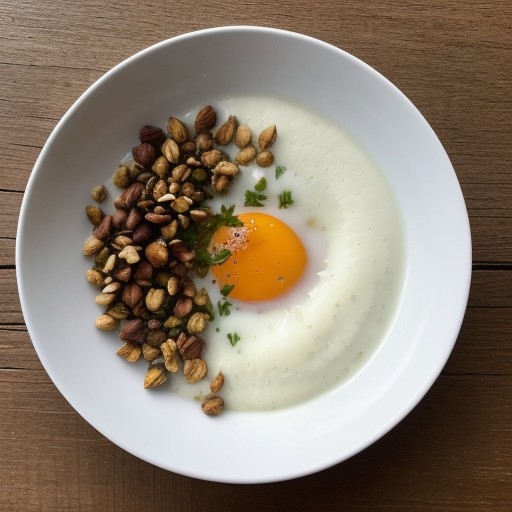
Steamed egg, known as “Chawanmushi” in Japanese cuisine or “Zhi Dan” in Chinese cooking, is a delicate custard dish prized for its silky, smooth texture and subtle flavor. This recipe creates a jiggly, tender egg custard that is light yet satisfying. The key to success lies in straining the egg mixture to remove air bubbles and steaming it gently to prevent a rubbery consistency. It serves as an excellent appetizer, a comforting light meal, or a gentle dish for those recovering from illness. With simple ingredients like eggs, water or broth, and a touch of seasoning, this dish highlights the natural quality of the eggs. It is versatile enough to include shrimp, mushrooms, or chicken, but the plain version is a classic staple that requires no embellishment.
Steamed Egg
Description
Steamed egg, known as "Chawanmushi" in Japanese cuisine or "Zhi Dan" in Chinese cooking, is a delicate custard dish prized for its silky, smooth texture and subtle flavor. This recipe creates a jiggly, tender egg custard that is light yet satisfying. The key to success lies in straining the egg mixture to remove air bubbles and steaming it gently to prevent a rubbery consistency. It serves as an excellent appetizer, a comforting light meal, or a gentle dish for those recovering from illness. With simple ingredients like eggs, water or broth, and a touch of seasoning, this dish highlights the natural quality of the eggs. It is versatile enough to include shrimp, mushrooms, or chicken, but the plain version is a classic staple that requires no embellishment.Ingredients
Directions
-
Crack eggs into a large bowl and beat gently until just combined, avoiding excessive frothing.
-
Add salt and soy sauce to the eggs and mix lightly.
-
Gradually pour in the hot water or dashi stock while whisking gently to combine.
-
Strain the egg mixture through a fine-mesh sieve into a measuring cup or jug to remove chalazae and air bubbles.
-
Pour the strained mixture into ramekins or small heatproof bowls, filling them about three-quarters full.
-
Cover the ramekins tightly with aluminum foil or heatproof lids to prevent water droplets from falling onto the surface.
-
Place the covered ramekins in a steamer basket over simmering water.
-
Steam gently for 12-15 minutes, or until a toothpick inserted into the center comes out clean and the custard is set but still jiggly.
-
Remove from heat and let cool slightly before serving.
-
Drizzle with a little sesame oil and garnish with chopped green onions or a drop of soy sauce if desired.
Nutrition Facts
Servings 2
- Amount Per Serving
- Calories 85kcal
- % Daily Value *
- Total Fat 5.5g9%
- Saturated Fat 1.5g8%
- Cholesterol 210mg70%
- Sodium 400mg17%
- Total Carbohydrate 1.0g1%
- Dietary Fiber 0.0g0%
- Sugars 0.5g
- Protein 6.0g12%
* Percent Daily Values are based on a 2,000 calorie diet. Your daily value may be higher or lower depending on your calorie needs.
Note
For the smoothest texture, ensure the water or stock is hot (but not boiling) before mixing with the eggs. This helps cook the eggs slightly and prevents a grainy texture.
The ratio of liquid to eggs is crucial. A 1:1.5 ratio (1 part egg to 1.5 parts liquid) typically yields a perfect custard consistency.
Do not boil the water in the steamer vigorously; keep it at a gentle simmer to avoid agitating the custard, which can cause bubbles and a rough texture.
You can add cooked shrimp, chicken pieces, or mushrooms to the bottom of the ramekins before pouring in the egg mixture for a heartier dish.
If you prefer a savory depth, use dashi stock instead of plain water. Miso paste can also be stirred into the mixture for a richer flavor.
