

This hearty vegan stuffed cabbage recipe reimagines the traditional Middle-Eastern dish by using a savory vegetable-based filling instead of meat. The tender cabbage leaves are wrapped around a mixture of uncooked rice, grated onion, and seasonings, then simmered slowly in a deep saucepan with a flavorful base of sautéed onions, canned tomatoes, and beef bones for a rich, umami depth. The result is a comforting, home-style meal with a pleasant balance of acidity from the lemon juice and sweetness from the raisins. Perfect for a cozy weeknight dinner or a festive holiday side dish, this recipe delivers robust flavors and a satisfying texture that warms the soul. It is simple to prepare with pantry staples, making it a reliable favorite for any home cook looking for a wholesome, plant-based option with authentic regional flair.
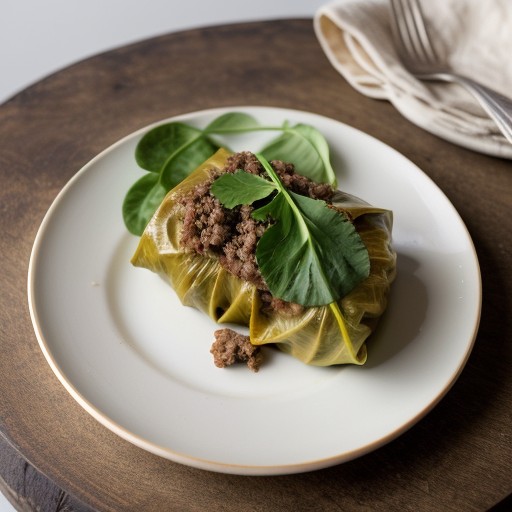
Stuffed Cabbage
Description
This hearty vegan stuffed cabbage recipe reimagines the traditional Middle-Eastern dish by using a savory vegetable-based filling instead of meat. The tender cabbage leaves are wrapped around a mixture of uncooked rice, grated onion, and seasonings, then simmered slowly in a deep saucepan with a flavorful base of saut&# 195;©ed onions, canned tomatoes, and beef bones for a rich, umami depth. The result is a comforting, home-style meal with a pleasant balance of acidity from the lemon juice and sweetness from the raisins. Perfect for a cozy weeknight dinner or a festive holiday side dish, this recipe delivers robust flavors and a satisfying texture that warms the soul. It is simple to prepare with pantry staples, making it a reliable favorite for any home cook looking for a wholesome, plant-based option with authentic regional flair.Ingredients
Directions
-
Pour boiling water over the whole cabbage head in a large bowl or sink and soak for 15 minutes to soften the leaves.
-
Carefully peel off 12 to 18 outer leaves, trimming the thick central vein if necessary to make rolling easier.
-
In a deep, heavy saucepan, heat the fat over medium heat.
-
Add the sliced onions and lightly brown them until soft and translucent.
-
Stir in the canned tomatoes, beef bones, half of the salt, and the pepper.
-
Reduce heat to low and simmer the tomato broth for 30 minutes to develop flavor.
-
Meanwhile, in a mixing bowl, combine the ground beef substitute (or omitted for vegan), uncooked rice, grated onion, egg substitute (or flax egg), cold water, honey, lemon juice, seedless raisins, and the remaining salt and pepper.
-
Place a spoonful of the filling mixture onto the center of each softened cabbage leaf.
-
Fold the sides of the leaf over the filling and roll up tightly to form a cylinder.
-
Gently place the rolled cabbage rolls into the simmering tomato sauce in the saucepan.
-
Cover the saucepan and simmer on low heat for 45 to 60 minutes, or until the rice is tender and the cabbage leaves are soft.
-
Remove the beef bones before serving. Serve hot with the sauce spooned over the rolls.
Nutrition Facts
Servings 6
- Amount Per Serving
- Calories 66.0kcal
- % Daily Value *
- Total Fat 0.6g1%
- Saturated Fat 0.1g1%
- Cholesterol 0.4mg1%
- Sodium 14644.1mg611%
- Total Carbohydrate 14.4g5%
- Dietary Fiber 3.9g16%
- Sugars 8.2g
- Protein 2.9g6%
* Percent Daily Values are based on a 2,000 calorie diet. Your daily value may be higher or lower depending on your calorie needs.
Note
The original recipe lists "Ground beef" and "Beef bones" but is tagged as Vegan. To make this truly vegan, substitute the ground beef with a plant-based ground meat alternative or a mixture of finely chopped mushrooms and lentils. Use vegetable broth instead of beef bones, or omit the bones entirely and add a teaspoon of miso paste or soy sauce for umami depth.
If the cabbage leaves are too large to roll easily, trim the thick white rib in the center to make them more pliable without breaking.
Leftovers can be stored in an airtight container in the refrigerator for up to 3 days. Reheat gently on the stovetop with a splash of water or broth to prevent drying out.
For a richer flavor, you can add a pinch of allspice or cinnamon to the tomato sauce, which is traditional in many Middle-Eastern stuffed vegetable recipes.
