

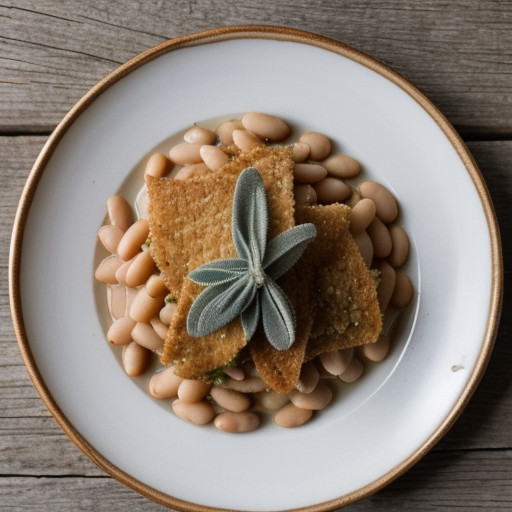
White Beans With Sage (Bloch)
Description
This comforting dish transforms simple canned white beans into a elegant side dish with minimal effort. The beans are gently warmed with aromatic herbs like fresh sage, winter savory, and bay leaf to infuse them with deep, earthy flavors. Meanwhile, onions and garlic are sauted until soft and sweet, creating a fragrant base. A splash of dry white wine deglazes the pan, adding a subtle brightness that cuts through the richness of the beans. The mixture is then simmered together, allowing the flavors to meld into a cohesive, savory sauce. Finished with fresh parsley, this dish offers a tender texture and robust taste. It pairs beautifully with grilled vegetables, crusty bread, or over polenta, making it a versatile option for weeknight dinners or special gatherings.Ingredients
Directions
-
Place the drained white beans in a small saucepan with the bay leaf, winter savory sprigs, and 2 whole sage leaves. Add enough water to just cover the beans. Warm gently over low heat for 10-15 minutes to allow the herbs to infuse the beans.
-
Remove the bay leaf and herb sprigs from the beans. Drain the beans, reserving the herb-infused broth.
-
While the beans warm, chop the remaining 8 sage leaves finely.
-
In a large skillet, heat water or olive oil over medium heat. Add the chopped onion, 1/2 teaspoon salt, and a few pinches of pepper. Saut until the onion begins to soften and release its juices, about 5 minutes.
-
Add the chopped garlic and chopped sage to the skillet. Saut for another 2-3 minutes until fragrant, being careful not to burn the garlic.
-
Pour in the dry white wine and cook for 1-2 minutes, stirring to deglaze the pan, until the liquid is nearly evaporated.
-
Add the warm beans and their reserved broth to the skillet with the onions. Add an additional 1/2 teaspoon salt and a few pinches of pepper.
-
Lower the heat to low and simmer for 15-20 minutes, stirring occasionally. Add a little water if the mixture becomes too dry; you want a saucy consistency.
-
Taste and adjust seasoning with additional salt and pepper if needed.
-
Stir in the fresh chopped parsley just before serving. Serve warm.
Nutrition Facts
Servings 4
- Amount Per Serving
- Calories 260.0kcal
- % Daily Value *
- Total Fat 0.6g1%
- Saturated Fat 0.2g1%
- Cholesterol 0.0mg0%
- Sodium 2.0mg1%
- Total Carbohydrate 56.0g19%
- Dietary Fiber 0.8g4%
- Sugars 0.0g
- Protein 5.4g11%
* Percent Daily Values are based on a 2,000 calorie diet. Your daily value may be higher or lower depending on your calorie needs.
Note
Storage: Leftovers can be stored in an airtight container in the refrigerator for up to 3 days. Reheat gently on the stove with a splash of water to restore sauciness.
Substitutions: If you cannot find fresh winter savory, extra thyme or rosemary works well. Olive oil can be used instead of water for sauting for richer flavor.
Variations: This dish is excellent served over polenta, mashed potatoes, or alongside grilled chicken or fish. For a heartier meal, add diced pancetta or bacon during the saut step (remove from vegan category).
Tips: Do not overcook the garlic or sage, as they can become bitter. Adjust the amount of wine based on preference; less wine results in a milder flavor.
