

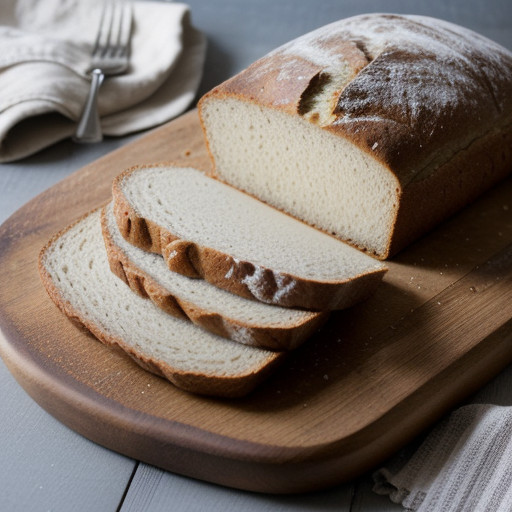
Sourdough Bread
Description
This hearty sourdough bread combines the tangy depth of a 24-hour fermented starter with the nutty flavor of buckwheat and bran. The recipe uses a hybrid method, blending wild yeast fermentation with commercial yeast for reliable rise and rich flavor. The result is a rustic loaf with a crisp, golden crust and a chewy, open crumb. Perfect for slicing with butter, serving alongside soups, or making sandwiches, this bread brings a professional bakery quality to your home kitchen. The slow fermentation process develops complex flavors that improve with age, making it a rewarding project for weekend bakers.Ingredients
Directions
-
Make a yeast sponge by mixing 1 cup of sourdough starter, 1 cup warm water, and 1 1/4 cups flour in a bowl.
-
Cover the bowl with a towel and let it sit in a warm spot for 24 hours.
-
After 24 hours, stir down the sponge and reserve half of it in a jar, refrigerating it for future use.
-
In a separate small bowl, mix the yeast with 1 1/2 cups warm water and let it proof for 10 minutes until foamy.
-
Add the yeast mixture to the remaining sponge.
-
Stir in the buckwheat flour, bran, malt extract, and salt.
-
Mix well, then gradually add the remaining flour, one cup at a time, until a soft dough forms.
-
Turn the dough out onto a floured surface and knead for 12 minutes, adding more flour only if the dough is excessively sticky.
-
The dough should be soft and elastic; stop adding flour once it is no longer sticky to the touch.
-
Place the dough in an oiled bowl, turning to coat, and cover.
-
Let the dough rise in a warm spot until doubled in bulk, approximately 1 to 2 hours.
-
Punch down the dough, remove it from the bowl, and knead briefly for 2 minutes.
-
Let the dough rest for 5 to 10 minutes, then cut it in half and shape into 2 oval loaves.
-
Cover the loaves with a towel and let them rise until doubled again, about 1 to 2 hours.
-
Optional: Allow the shaped loaves to rise in a cool spot for several hours to enhance sourdough flavor.
-
Preheat oven to 400F (200C).
-
Bake the loaves at 400F (204C) for 15 minutes.
-
Reduce oven temperature to 350F (175C) and bake for another 15 to 20 minutes.
-
Reduce oven temperature to 325F (165C) and bake for a final 15 to 25 minutes, or until the loaves sound hollow when tapped on the bottom.
-
Cool the bread completely on a wire rack before slicing.
Nutrition Facts
Servings 2
- Amount Per Serving
- Calories 1636.8kcal
- % Daily Value *
- Total Fat 5.6g9%
- Saturated Fat 1.0g5%
- Cholesterol 0.0mg0%
- Sodium 689.9mg29%
- Total Carbohydrate 332.1g111%
- Dietary Fiber 12.2g49%
- Sugars 3.5g
- Protein 47.2g95%
* Percent Daily Values are based on a 2,000 calorie diet. Your daily value may be higher or lower depending on your calorie needs.
Note
Malt extract can be found at stores selling home-brewing and wine making supplies, as well as some health food stores.
Variation: You can proof the yeast in a mixture of beer and water instead of plain water to add extra flavor to the bread.
Storage: Store leftover bread in a paper bag at room temperature for up to 3 days, or freeze slices for longer storage.
The total flour amount (6 cups) includes the 1 1/4 cups used in the initial sponge. You will be adding the remaining 4 1/2 to 5 cups during the dough formation stage.
The gradual reduction of oven heat mimics the falling temperature of a wood-fired oven, helping to create a crisp crust while ensuring the interior is fully baked.
