

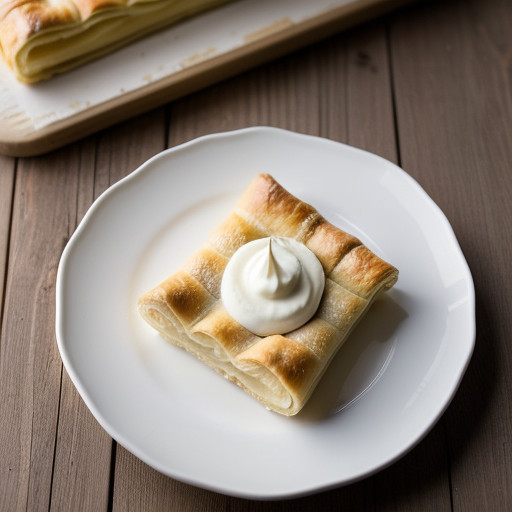
This homemade strudel pastry is the ultimate labor of love, offering a flaky, tender texture that store-bought versions simply cannot match. By creating a buttery “burro” mixture and laminating it into a flour-based “pasta” dough, you achieve layers of crisp, shattering pastry that hold fillings beautifully. The process requires patience and careful rolling, but the result is a sophisticated base for traditional apple strudel, berry tarts, or even savory meat pies. It keeps well in the refrigerator for up to ten days, making it an excellent make-ahead component for holiday baking or special weekend brunches.
Strudel Pastry Basic Recipe
Description
This homemade strudel pastry is the ultimate labor of love, offering a flaky, tender texture that store-bought versions simply cannot match. By creating a buttery "burro" mixture and laminating it into a flour-based "pasta" dough, you achieve layers of crisp, shattering pastry that hold fillings beautifully. The process requires patience and careful rolling, but the result is a sophisticated base for traditional apple strudel, berry tarts, or even savory meat pies. It keeps well in the refrigerator for up to ten days, making it an excellent make-ahead component for holiday baking or special weekend brunches.Ingredients
Directions
-
In a food processor, combine 1 stick of cold butter, 1 teaspoon salt, and 2 1/2 cups flour. Pulse until the mixture resembles coarse breadcrumbs.
-
Slowly add ice water through the feed tube while processing, just until the dough begins to come together into a cohesive mass.
-
Remove the dough from the processor, form it into a ball, and flatten it into an 8 by 10-inch rectangle. Wrap tightly and place in the refrigerator to chill.
-
In the cleaned food processor bowl, place the remaining 3 sticks of cold butter and 1 cup of flour. Blend until smooth and creamy to create the "burro" mixture.
-
Scrape the burro mixture onto a board. Working quickly, form it into a 4-inch square. Wrap tightly and place in the refrigerator to chill alongside the pasta dough.
-
Allow both mixtures to chill for 30 minutes, or until they are similar in firmness.
-
On a well-floured clean surface, roll out the pasta dough mixture. Place the chilled burro mixture in the center.
-
Fold the pasta dough over the burro mixture, sealing the edges completely like wrapping a gift.
-
Flatten the package gently with a rolling pin. Roll it out into an 8 by 16-inch rectangle, flouring the surface and dough regularly to prevent sticking.
-
If butter begins to seep out, dust that spot heavily with flour and continue rolling carefully.
-
Fold the bottom third of the dough up and the top third down to form a small package. Turn the dough one-quarter turn clockwise.
-
Pat the dough gently with the rolling pin to help the layers adhere, then roll it out again to an 8 by 16-inch rectangle.
-
Repeat the folding process (bottom third up, top third down) and turn one-quarter turn.
-
Wrap the dough tightly in plastic wrap and refrigerate for 30 minutes, covered with a moist cloth if necessary to prevent drying.
-
Remove from the refrigerator and repeat the rolling-and-folding process two more times, allowing 30 minutes of refrigeration between each fold.
-
After the final fold, the dough is ready to use. Wrap tightly in plastic wrap.
Nutrition Facts
Servings 4
- Amount Per Serving
- Calories 179.2kcal
- % Daily Value *
- Total Fat 20.2g32%
- Saturated Fat 12.8g64%
- Cholesterol 53.8mg18%
- Sodium 160.8mg7%
- Total Carbohydrate 0.0g0%
- Dietary Fiber 0.0g0%
- Sugars 0.0g
- Protein 0.2g1%
* Percent Daily Values are based on a 2,000 calorie diet. Your daily value may be higher or lower depending on your calorie needs.
Note
Storage: The finished dough can be kept in the refrigerator for up to 10 days. Ensure it is wrapped tightly in plastic wrap to prevent drying out.
Temperature Control: Keep all ingredients, especially the butter, very cold. If the butter becomes too soft or starts to melt during rolling, return the dough to the refrigerator for 10-15 minutes before continuing.
Rolling Surface: A clean, cool marble surface is ideal for rolling as it helps keep the butter firm. If you do not have marble, a clean countertop or large cutting board works well.
Usage: This dough is designed for strudels, turnovers, and tarts. Roll out thinly for strudels to achieve maximum flakiness.
